
24 hr
Sumatran Orangutan Trek in Mount Leuser National Park
Trek through pristine rainforest to observe critically endangered orangutans and wildlife in their jungle home
Reserve
Hand-picked by our editors — only the best 5 treks from 23 reviewed
Verified partners for every tour, free cancellation where available, and instant confirmation on every booking.
24 hr
Trek through pristine rainforest to observe critically endangered orangutans and wildlife in their jungle home
Reserve
72 hr
Trek deep into Mount Leuser National Park, camp beside rainforest streams, and track wild orangutans
Reserve
48 hr
Trek through Sumatran rainforest, spot wild orangutans, camp under the canopy, and raft back by river
ReservePrices from verified partners. Availability updates in real time at checkout. Free cancellation policies apply where shown.
The landmarks, rooms, and views travelers on this tour remember — all visible on a single visit.
Experience the high-altitude ecosystem through guided forest walks and observation of local flora. This area is essential for understanding the primary tropical forest structure.
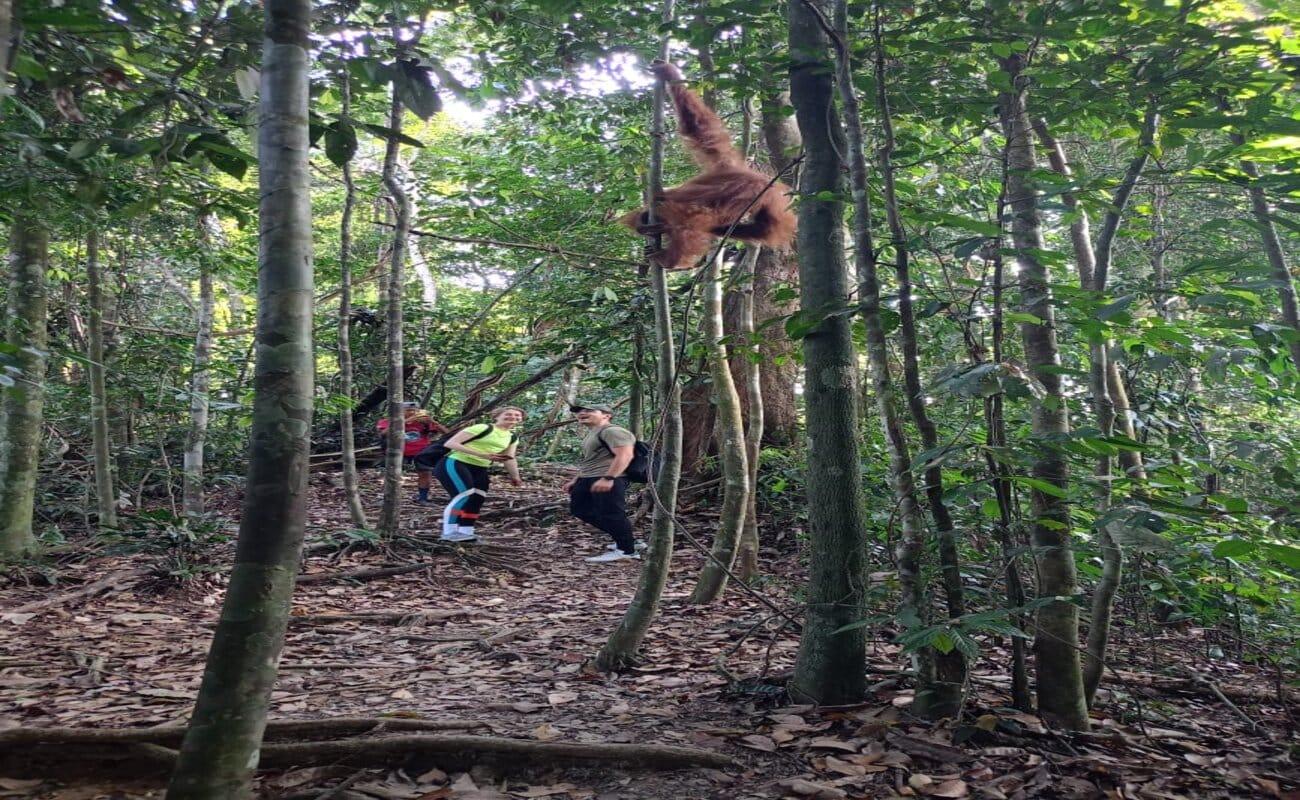
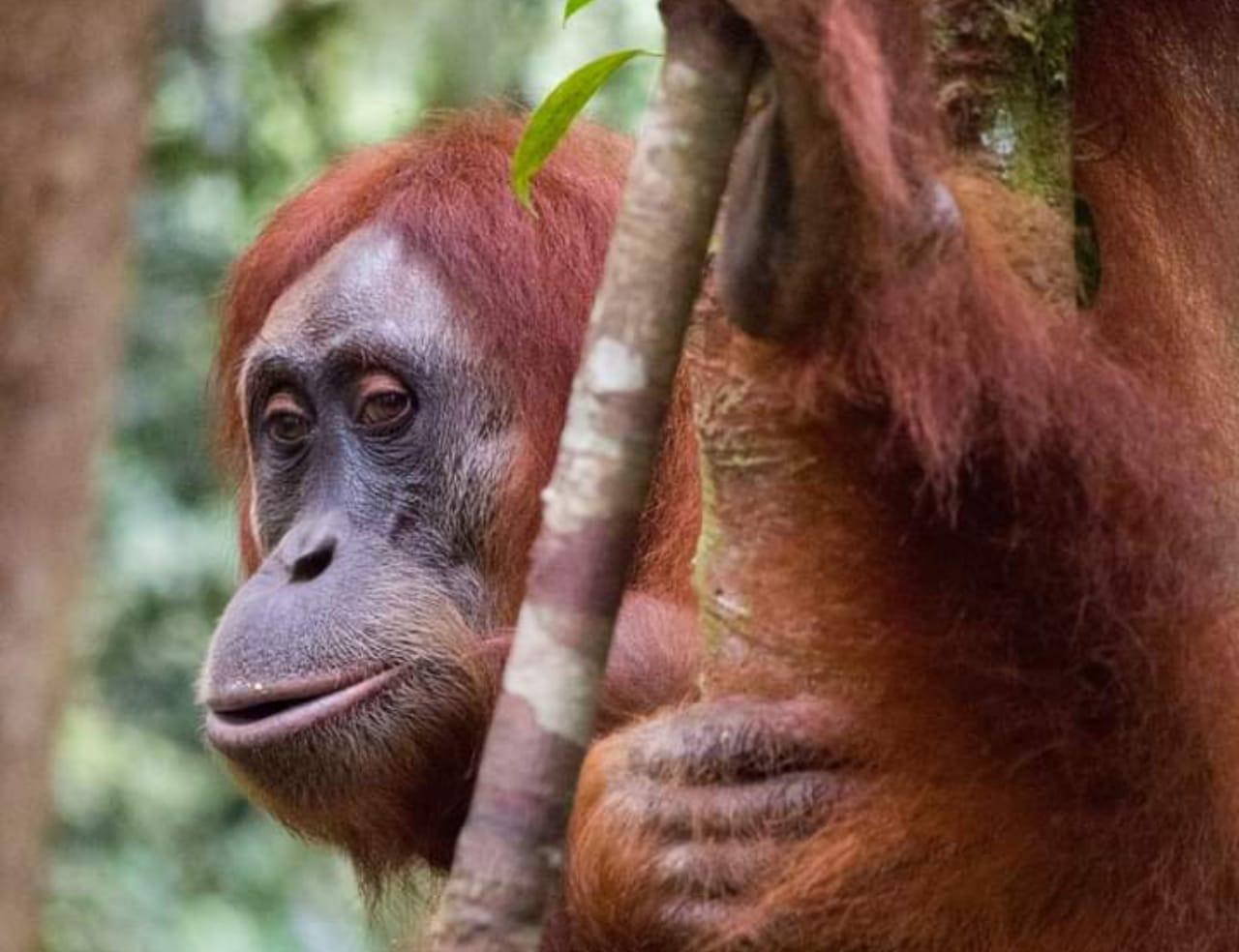
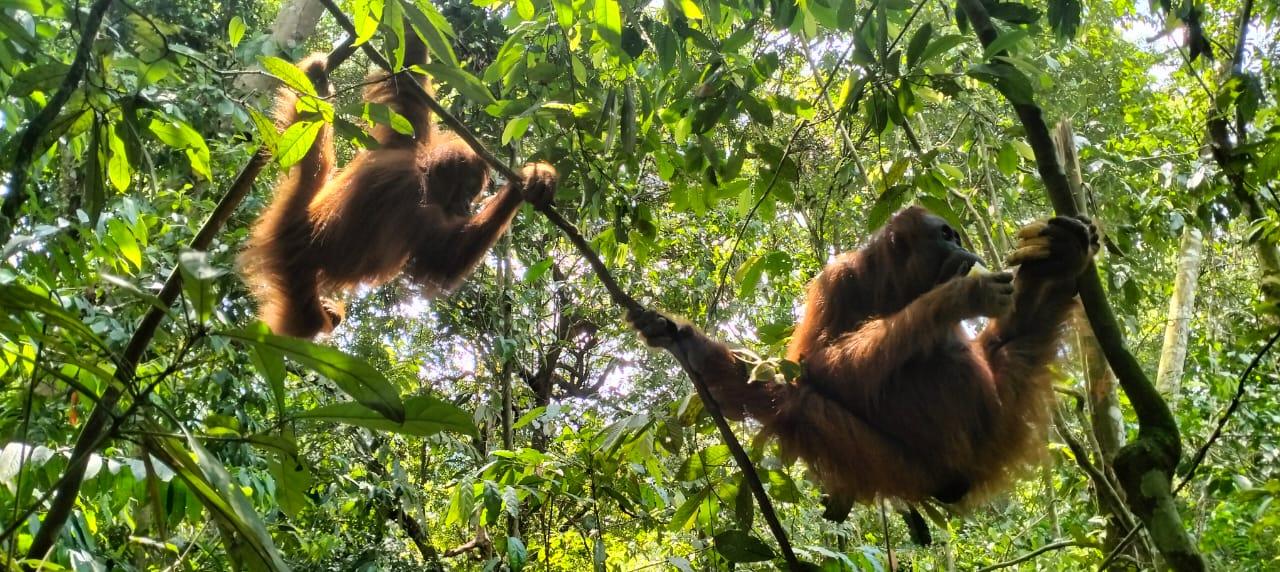
Observe the rehabilitation of Sumatran orangutans in their natural habitat with professional guidance. Visitors must keep a strict distance of 10 meters.
This river provides a refreshing natural pathway back to the village after a long day of trekking. The water flow is monitored daily for safety.
Explore unique underground geological formations near the main trekking routes. These caves offer a cooler environment during peak humidity hours.
These paths lead through centuries-old trees and high-biodiversity zones inaccessible by standard roads. Experts estimate this forest contains thousands of plant species.
They complement each other; most visitors who do both find the orangutan observation of bukit lawang jungle trekking tours more thrilling, while Tangkahan offers a more relaxed, gentle encounter with rescued giants.
| Feature | Top pick Bukit Lawang | Tangkahan |
|---|---|---|
Primary Wildlife Focus |
Orangutans and primates | Sumatran elephants |
Main Activities |
Rainforest hiking and wildlife spotting | Elephant bathing and river tubing |
Trek Intensity |
Moderate to challenging | Low to moderate |
Typical Duration |
3 hours to multi-day | 4–6 hours (day trip) |
Accessibility |
Moderate (jungle terrain) | Moderate (river crossing required) |
| See tickets → |
Verdict: Choose the bukit lawang jungle trekking tours tour for an immersive deep-jungle hiking experience, or opt for Tangkahan if you prefer direct, tactile animal interaction and water-based leisure.
Choose your ticket, select your date, and reserve in under two minutes. Secure checkout handled by our verified partner.
Instant confirmation by email, with a mobile voucher you can save offline. No printing, no queuing at a collection desk.
Arrive at the entrance, show your voucher on your phone, and walk in. Most tickets include priority or skip-the-line access.
Practical details for your visit straight from our verified partners — hours, access, rules, and how to get there.
Bukit Lawang, North Sumatra
Primary office for all guided trekking departures.
Private car hire from Medan to Bukit Lawang is the most direct method. Duration is 3-4 hours depending on traffic.
Shared minivans depart regularly from Pinang Baris station in Medan. Duration is 4-5 hours at a lower cost.
Wear light, breathable clothing that covers skin to protect against insects and vegetation. Sturdy hiking boots or shoes with good grip are essential for the uneven jungle floor.
Keep all personal belongings in a secure, water-resistant daypack. Do not leave valuables unattended at base camp or in open public areas.
Use a waterproof cover for cameras and mobile devices due to high jungle humidity. Respect wildlife by maintaining a distance and avoiding the use of flash photography.
These jungle trekking paths involve steep inclines and mud, making them unsuitable for wheelchairs or those with limited mobility. Visitors should assess their physical ability before booking.
Mobile signal is limited or non-existent once you enter the deep forest. Use phones primarily for offline navigation and photography.
Bukit lawang jungle trekking tours can accommodate families with older children capable of sustained walking. Younger children may require private guides to adjust the pace accordingly.
Guides provide fresh fruit and local meals during full-day and multi-day treks. Always carry a reusable bottle, as refillable water stations are available in the village.
Pets are not permitted on any organized jungle trekking tours. Local biodiversity protection rules strictly forbid domestic animals in the national park.
All visitors must pay the mandatory 150,000 IDR conservation fee per person per day for foreign visitors. Always follow your licensed guide's instructions regarding distance from orangutans.
Bukit Lawang, North Sumatra
Primary office for all guided trekking departures.
Get directionsBest time to go, insider tips, nearby landmarks, and the cancellation fine print — flip through to skim what matters to you.
How crowds, weather, and events shift across the year.
June to August offers drier trails and better visibility for spotting wildlife. Temperatures are warmer, but the lack of heavy rain makes trekking more comfortable.
November to January is the wet season with increased rainfall making paths muddy. Trails may be slippery, requiring extra caution during these months.
Small details that turn a good visit into a great one.
Maintain at least 10 meters distance from orangutans at all times to prevent disease transmission. Never offer human food to any jungle animals encountered.
Choose footwear with deep treads as jungle paths become slippery immediately after brief tropical showers. Break in new boots before your trip to avoid blisters.
Non-bookable sights within a short walk — free to visit, easy to pair.
The central river running through the village used for tubing and swimming.
A local limestone cavern system featuring distinct rock formations.
Walkable area demonstrating the traditional rubber tapping process.
Flexible, no hidden fees.
Full refunds are typically provided for cancellations made at least 48 hours prior to the trek. Please note that the 150,000 IDR conservation fee per person per day for foreign visitors remains non-refundable once processed.
Hand-picked options within walking distance — pick a district for vibe, or a specific hotel for convenience.
Sustainable lodging situated along the riverbank.
Authentic local houses offering basic amenities for trekkers.
Higher-end lodging options located on the jungle fringe.
Mount Leuser National Park protects 7,927 square kilometres of primary rainforest across northern Sumatra, one of the last intact ecosystems on Earth where orangutans, tigers, elephants, and rhinoceros coexist in the wild. Bukit Lawang sits at the eastern boundary of this UNESCO World Heritage Site, a riverside village that emerged in the 1970s as a rehabilitation centre for captive-born Sumatran orangutans. By the mid-1980s, the feeding platform programme had drawn visitors who wanted to observe great apes returning to forest life. That initiative ended in the 1990s, but the village remained, and local guides began leading treks deeper into the park to observe fully wild populations. Today, Bukit Lawang jungle trekking tours offer the most reliable access to wild Sumatran orangutans outside of research stations. The Bohorok River valley rises through lowland dipterocarp forest into hill zones where fig trees, strangler vines, and canopy giants reach forty metres. Semi-habituated orangutans forage near established trails; deeper routes cross ridgelines into primary zones where sightings depend on fruit cycles and nesting behaviour. Thomas's leaf monkeys move in the mid-canopy, white-handed gibbons call at dawn, and the forest floor holds orchid mantises, atlas moths, and reticulated pythons. The terrain is steep—slopes average fifteen to twenty degrees, and humid conditions persist year-round. Guides track orangutans by listening for branch movement and scanning fruiting trees; most encounters occur between eight and eleven in the morning when apes feed before midday heat. Multi-day expeditions follow the Bohorok upstream or traverse ridge systems toward the park's interior. Overnight camps occupy cleared riverside sites where guides prepare meals over wood fires and visitors sleep in tarpaulin shelters or under mosquito nets strung between trees. Night walks reveal civets, slow lorises, and flying squirrels; the river itself holds monitor lizards and freshwater crabs. The conservation fee—150,000 Indonesian rupiah per person per day for foreign visitors—funds ranger patrols and anti-poaching efforts. Permits are arranged through licensed guide associations in Bukit Lawang, and all treks require an accompanying certified guide. The village maintains a cooperative structure: guides rotate assignments, and revenue supports families whose livelihoods once depended on logging and palm oil conversion. Trekking here is not observation from a distance—it is immersion in one of the planet's most biodiverse and threatened landscapes, where every sighting depends on the forest remaining intact.
"The Bohorok River valley rises through lowland dipterocarp forest into hill zones where fig trees, strangler vines, and canopy giants reach forty metres."
A step-by-step walkthrough of the visit — what you'll see, how long each stage takes, and the details that matter.
You arrive at the trailhead by seven in the morning, when mist still clings to the Bohorok and the air is cool enough to move comfortably under a pack. Your guide checks permits, distributes water, and points to the first climb—a root-laced slope that rises steeply into the canopy. Within twenty minutes you are deep in primary forest, surrounded by the hum of cicadas and the rustle of leaf litter under boot soles. The guide pauses, listening, then gestures upward: an adult female orangutan sits in the crown of a fig tree thirty metres above, plucking fruit methodically and tossing rinds to the forest floor. You continue upstream, crossing shallow sections of the Bohorok on stones slick with algae, pausing when a troop of Thomas's leaf monkeys moves overhead. By midday you stop for lunch at a riverside clearing—rice, vegetables, and mango carried in by porters. The afternoon section is harder: a ridge climb through secondary growth where sunlight breaks through and humidity thickens. You reach camp by four, a tarpaulin shelter strung above a sand bank. After dark, your guide leads a short walk with headlamps: a slow loris clings to a vine, eyes reflecting yellow, and a civet rustles through undergrowth ten paces from the trail. You return to camp, eat by firelight, and sleep to the sound of the river and the distant call of gibbons preparing for dawn.
You can book bukit lawang jungle trekking tours at any time, as the administrative hours are 00:00–23:59 daily.
The mandatory conservation fee is 150,000 IDR per person per day for foreign visitors.
We recommend arriving between 07:00–10:00 to ensure the best wildlife activity and cooler morning temperatures.
Wear long sleeves and trousers to protect against insects, along with sturdy hiking boots.
It is recommended to bring your own water bottle, but your guide will provide meals during your booked trek.
Yes, but please verify the difficulty level with your operator when booking your bukit lawang jungle trekking tours.
Treks usually continue in light rain, but severe weather may cause local operator re-scheduling for safety.
Most visitors arrive via private taxi or shared minivan from Medan to the Bukit Lawang village center.
Photography is encouraged, but please refrain from using flash to avoid disturbing the native wildlife.