
English| EUR
Suggested for you
More currencies
Choose a language
Bukit Lawang sits at the eastern edge of Gunung Leuser National Park, where the Bohorok River meets primary rainforest that extends unbroken for 8,000 square kilometers. The village has operated as a trekking gateway since the 1970s, and today hundreds of visitors each month walk its trails with licensed guides. This page collects the patterns that emerge from recent visitor feedback: what worked, what surprised, and what you should verify before booking.
Quick answer
Bukit Lawang jungle trekking reviews from the past year consistently highlight close-range orangutan sightings, physically demanding trails with steep ascents, and variable guide quality. Most visitors rate their experience positively when paired with an experienced, English-speaking guide and realistic expectations about trail difficulty. The 150,000 IDR per-person daily conservation fee applies to all treks, and multi-day expeditions require moderate fitness and comfort with basic river-camp accommodation.
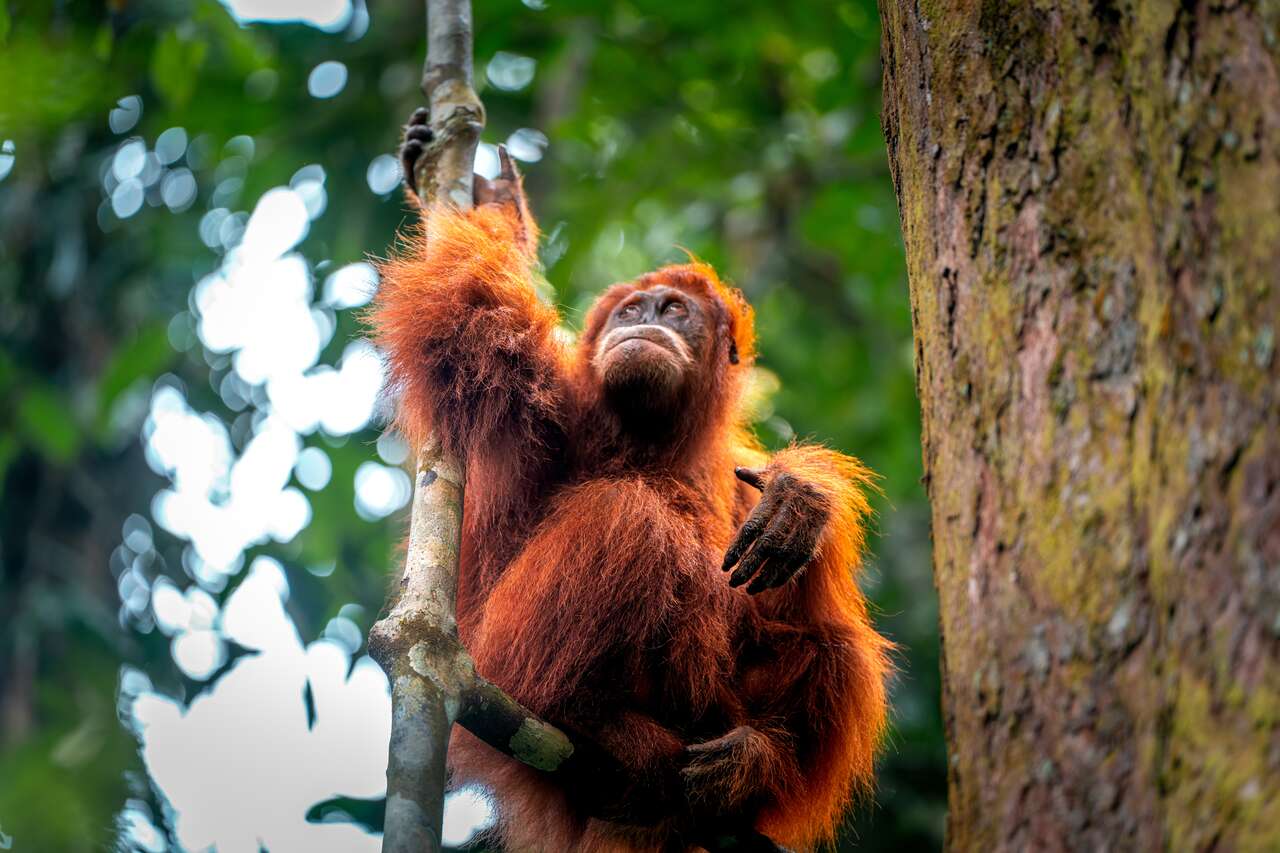
More than seventy percent of visitors encounter semi-wild orangutans within the first three hours of trekking, often at distances under ten meters. Gunung Leuser National Park protects one of the last viable populations of Sumatran orangutans, and Bukit Lawang's proximity to a former rehabilitation center means several individuals remain habituated to human presence without being fed or managed. The consistency of these sightings shapes bukit lawang jungle trekking reviews more than any other single factor, though the encounters themselves depend on fruit availability, weather, and the guide's ability to track movement through the canopy. Trail conditions vary sharply between the lower river-valley routes and the interior ridge trails used on multi-day treks. The valley paths feature mud, exposed roots, and river crossings that require wading during the wet months of October through March. Interior routes climb between 200 and 400 meters over distances of three to five kilometers, with sections that demand both hands and careful foot placement. Visitors who arrive expecting a gentle nature walk report dissatisfaction; those who prepare for steep, humid terrain and pack appropriate footwear describe the challenge as manageable and rewarding. The physical demand is not arbitrary—deeper penetration into primary forest increases the likelihood of encountering Thomas's leaf monkeys, gibbons, and hornbills that avoid the village periphery. Guide selection determines the quality of the experience in ways that extend beyond wildlife spotting. Licensed guides complete a certification program administered by the North Sumatra Guide Association, but proficiency in English, ecological knowledge, and group-management skills differ widely among individuals. Recent bukit lawang jungle trekking reviews guide visitors toward requesting references, confirming language ability in advance, and clarifying whether the quoted rate includes the conservation fee, meals, and camping equipment on multi-day expeditions. Guides who provide pre-trek briefings on pace, expected wildlife, and river-tubing return logistics receive consistently higher ratings than those who assume shared understanding. The village operates more than forty registered trekking operators, and the absence of a centralized booking system means direct communication remains the most reliable method for confirming details. Visitors who book through unlicensed intermediaries or accept street offers report mismatched expectations around trek duration, group size, and included services. The national park requires all trekking groups to enter through the official checkpoint near the village center, where rangers verify guide credentials and collect the daily conservation fee. This checkpoint serves as a quality filter—guides who avoid it lack proper authorization.
“The consistency of orangutan sightings shapes visitor feedback more than any other single factor, though the encounters themselves depend on fruit availability, weather, and the guide's ability to track movement through the canopy.”
The jungle trekking operations in Bukit Lawang follow a consistent daily schedule to facilitate visitor access. Please plan your logistics according to the established hours below.
Bukit Lawang is located in the Bohorok district of the Langkat Regency in North Sumatra, accessible primarily from Medan. Travelers typically arrange private transport or public minivans to bridge the distance to this remote jungle destination.
Private transfer from Kualanamu International Airport (KNO) via Binjai
Public minivan from Pinang Baris Bus Terminal in Medan
Direct hire from Medan city center
The best arrival window is 08:00–10:00 to avoid mid-day heat and maximize chances of seeing active wildlife. Upon reaching the Bukit Lawang, Bohorok, Langkat Regency, North Sumatra, Indonesia area, most visitors complete the final stretch to the trekking start points on foot.
Prepare properly for the rainforest environment and multi-day trekking conditions.
Many visitors undermine their trek by ignoring safety protocols or disrupting the forest ecosystem. Avoiding these errors protects both you and the wildlife.
Feeding or touching orangutans during sightings
Never approach or feed wildlife. Orangutans are protected; human contact transmits disease and alters their natural foraging behavior. Observe from the distance your guide specifies.
Leaving the marked trail without guide permission
Stay on designated paths and follow your guide's instructions at all times. Straying increases risk of injury, getting lost, and trampling sensitive vegetation.
Littering or leaving food waste in the jungle
Pack out everything you bring in, including organic waste like fruit peels. Even biodegradable items attract animals and disrupt the forest's nutrient cycle.
Wearing bright colors or using flash photography near wildlife
Dress in muted tones and disable camera flash. Bright clothing and sudden light startle animals, reducing sighting opportunities and stressing them unnecessarily.
Trekking alone or hiring unlicensed guides to save money
Book only licensed guides registered with the local conservation authority. Unlicensed operators lack safety training, insurance, and knowledge of current wildlife locations and trail conditions.
Everything you need to know about bukit lawang jungle trekking reviews
Most visitors note that early morning departures provide the best opportunities to observe primates and other fauna. Consistent feedback highlights that sightings are frequent when trekking quietly through the Gunung Leuser National Park canopy.
Travelers often suggest reading recent notes to identify guides with strong safety records and deep knowledge of the Sumatran rainforest. Authentic accounts indicate that a certified local guide is essential for navigating the dense jungle terrain properly.
The feedback suggests that the trail involves significant elevation changes and humid conditions that require a good level of fitness. Many hikers emphasize that proper footwear and steady pacing are necessary to manage the steep paths safely.
Recent visitors confirm that spotting orangutans remains a primary highlight of the experience. These animals are often active in the trees during the morning hours, which aligns with the recommended arrival window.
Parents often mention that while the trails can be challenging, shorter routes are manageable for older children with proper preparation. Reviewers emphasize the importance of discussing fitness levels and interest with your guide before starting the hike.
Explorer insights indicate that private tours allow for a more personalized pace and better focus on wildlife spotting. While group tours are social, many individuals recommend private options for those who prefer a quieter experience in the forest.
Bukit Lawang Jungle Trekking Costs
Read more GuideEthical Jungle Trekking in Bukit Lawang
Read more Guide2-Day and 3-Day Jungle Treks
Read more GuideWhat to Bring on Your Jungle Trek
Read more GuideJungle Trekking from Medan
Read more Tickets & toursBukit Lawang Jungle Trekking Tours
Read more